Category: Health and Wellness

  • Eco-Friendly Yoga Mats: Compare Non-Toxic Materials, Grip, Comfort & Performance

    Eco-Friendly Yoga Mats: Compare Non-Toxic Materials, Grip, Comfort & Performance

    Choosing an eco-friendly yoga mat sounds simple—until you realise how many materials, textures, thicknesses, and design options are available. What works perfectly for one yogi may feel completely wrong for another.

    Some people need maximum grip for sweaty hot yoga sessions. Others prioritize cushioning for sensitive joints, or portability for travel. Sustainability matters too, but “eco-friendly” can mean different things depending on materials and manufacturing processes.

    That’s why this guide doesn’t declare a single “best” eco-friendly yoga mat.

    Instead, it gives you a clear, honest comparison of the most popular non-toxic yoga mat options, explains how different materials actually perform in real practice, and helps you decide what works best for your body, your values, and your style of yoga.

    What Makes a Yoga Mat Truly Eco-Friendly?

    The term eco-friendly is often used loosely. In yoga mats, it generally refers to materials and processes that reduce environmental and health impact, especially when compared to traditional PVC mats.

    An eco-friendly yoga mat typically focuses on:

    • Non-toxic materials
    • PVC-free construction
    • Lower environmental impact
    • Longer usable lifespan

    Eco-friendly does not automatically mean biodegradable, ultra-soft, or perfect for every type of yoga. Understanding the materials is key.

    Common Materials Used in Eco-Friendly Yoga Mats

    Natural Rubber

    Natural rubber mats are made from rubber tree sap. They are popular for their strong grip and cushioning.

    What to expect:

    • Excellent dry grip
    • Dense, supportive feel
    • Heavier than synthetic mats

    Things to consider:

    • Can have a natural rubber scent at first
    • May degrade faster with heavy sun exposure

    Cork

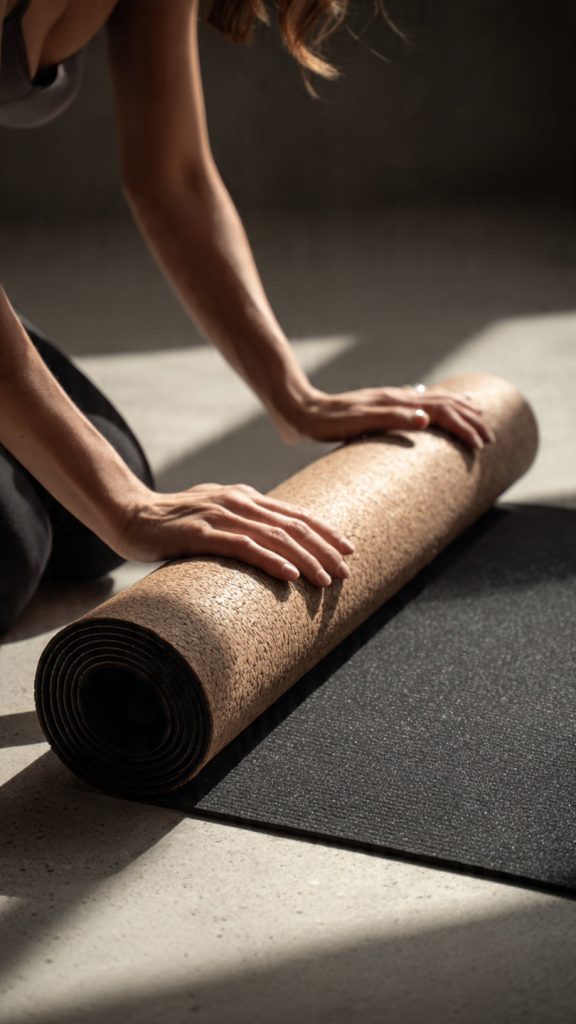
    Cork yoga mats use a thin cork layer bonded to a rubber base. Cork behaves differently than rubber.

    What to expect:

    • Grip improves with moisture
    • Naturally antimicrobial
    • Firm, grounded feel

    Things to consider:

    • Less grippy when completely dry
    • Heavier and less flexible

    Eco-PU (Eco Polyurethane)

    Eco-PU is a synthetic surface designed to be non-toxic and sweat-activated.

    What to expect:

    • Exceptional wet grip
    • Smooth, skin-friendly surface
    • Popular for hot yoga

    Things to consider:

    • Firmer feel
    • Higher price range

    Key Performance Factors That Actually Matter

    Grip: Dry vs Wet

    Grip is the number one factor most people notice.

    • Dry yoga: Natural rubber performs very well
    • Sweaty / hot yoga: Cork and eco-PU tend to outperform rubber

    If your hands slip during down dog, grip—not thickness—is usually the issue.

    Thickness & Joint Comfort

    Thickness is measured in millimeters (mm).

    • 3–4mm: More stability, less cushioning
    • 4–5mm: Balanced for most practitioners
    • 6mm+: Extra joint support, less ground feel

    More thickness isn’t always better. Too much cushioning can affect balance.

    Weight & Portability

    Eco-friendly mats are often heavier.

    • Rubber and cork mats are usually heavier
    • Travel yogis may prefer lighter designs or foldable options

    Durability & Longevity

    A durable mat that lasts years is often more eco-friendly than one that needs replacing frequently.

    Look for:

    • Dense construction
    • Tear resistance
    • Surface that doesn’t peel or flake

    Design, Color & Personal Preference

    Color may seem cosmetic, but it matters more than people admit.

    • Some brands offer 10+ color options
    • Lighter colors show wear faster
    • Textured designs can improve grip perception

    A mat you love visually is more likely to be used consistently.

    Side-by-Side Comparison: Popular Eco-Friendly Yoga Mats

    FeatureNatural RubberCorkEco-PU
    Best forDry gripHot yogaHot yoga & alignment
    Grip when wetModerateExcellentExcellent
    CushioningMediumFirmFirm
    WeightMedium–HeavyHeavyMedium
    AntimicrobialNoYesNo
    Color optionsManyLimitedMany

    This table shows differences, not rankings.

    Popular Eco-Friendly Yoga Mats (Neutral Comparison)

    Below are some widely used eco-friendly yoga mats, each serving different needs.

    Manduka eKO Yoga Mat

    • Material: Natural rubber
    • Feel: Dense and supportive
    • Best for: Regular, non-heated practice

    Why people choose it:
    Durability and stability over softness.

    Color options: Multiple muted and bold tones.

    👉 Check current price and available colors on Amazon

    Liforme Original Yoga Mat

    • Material: Eco-PU surface with rubber base
    • Feel: Firm, high traction
    • Best for: Hot yoga and alignment-focused practice

    Why people choose it:
    Sweat-activated grip and alignment guides.

    Color options: Around 12 distinct colors and patterns.

    👉 Check current price and available colors on Amazon

    Jade Harmony Yoga Mat

    • Material: Natural rubber
    • Feel: Grippy and lightweight
    • Best for: Sustainability-focused yogis

    Why people choose it:
    Strong dry grip and environmental mission.

    Color options: Limited, natural tones.

    👉 Check current price on Amazon

    Gaiam Cork Yoga Mat

    • Material: Cork + rubber
    • Feel: Firm and grounded
    • Best for: Budget-conscious eco buyers

    Why people choose it:
    Affordable entry into cork mats.

    👉 Check current price on Amazon

    Yoloha Unity Cork Yoga Mat

    • Material: Cork + rubber
    • Feel: Thick and stable
    • Best for: Heavy sweaters and joint support

    Why people choose it:
    Grip improves as you sweat.

    👉 Check current price on Amazon

    Choose Your Best Eco-Friendly Yoga Mat by Use Case

    🔥 Hot Yoga & Sweat-Heavy Practice

    Look for:

    • Cork or eco-PU surfaces
    • Antimicrobial properties

    👉 See our full guide to eco-friendly yoga mats for hot yoga

    🌱 Beginners

    Look for:

    • Medium thickness (4–5mm)
    • Easy maintenance
    • Balanced grip

    👉 See non-toxic yoga mats for beginners

    🦵 Joint Sensitivity

    Look for:

    • 5–6mm thickness
    • Dense cushioning
    • Stability over softness

    ✈️ Travel & Portability

    Look for:

    • Lighter mats
    • Foldable designs

    🌍 Sustainability-First Buyers

    Look for:

    • Natural rubber or cork
    • Minimal packaging
    • Long lifespan

    Common Mistakes When Buying Eco-Friendly Yoga Mats

    • Assuming “eco-friendly” means the same thing across brands
    • Choosing softness over stability
    • Ignoring sweat behavior
    • Buying based on price alone

    Avoiding these mistakes leads to a much better long-term experience.

    Care & Maintenance for Eco-Friendly Yoga Mats

    • Wipe after every session
    • Use mild soap only
    • Avoid prolonged sun exposure
    • Air dry completely

    Proper care can add years to your mat’s life.

    Frequently Asked Questions About Eco-Friendly Yoga Mats

    Are eco-friendly yoga mats better than PVC mats?
    They often offer better grip and avoid synthetic chemical odors.

    Do natural rubber mats smell?
    Some have a mild scent initially, which fades with use.

    Are cork yoga mats slippery?
    They perform best with moisture and are ideal for sweaty practices.

    How long do eco-friendly yoga mats last?
    With proper care, several years of regular use.

    (Enable FAQ schema in Yoast)

    FINAL THOUGHTS

    There is no universal “best” eco-friendly yoga mat.

    The right choice depends on how you practice, how you sweat, how your joints feel, and what you value most. Use this guide to narrow your options, then explore the comparisons that match your needs.

    👉 Check current prices and available colors on Amazon and choose the eco-friendly yoga mat that fits your practice best.